

Annual Community Update
Leading with Community
The annual community update highlights our work and the efforts of partners across Harvard to strengthen community, advance our shared values, and foster full participation in University life.
Sustaining our academic excellence and nurturing our campus culture are not separate goals—they are profoundly and mutually reinforcing.”
Alan M. Garber
President, Harvard University
Explore the Community Update
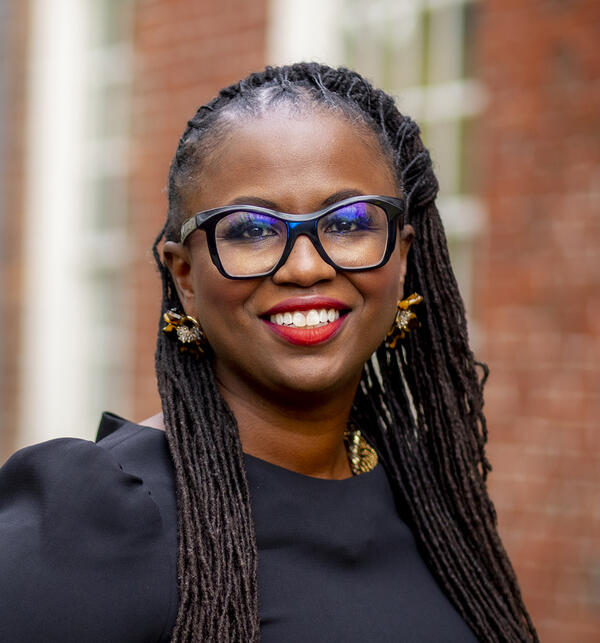
Leadership Letter
Read a letter from Sherri Ann Charleston, Harvard's Chief Community and Campus Life Officer.
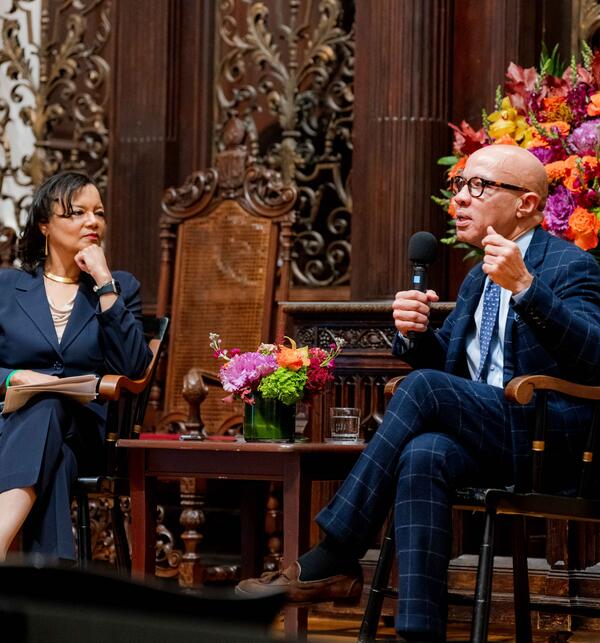
Leading with Values
Harvard’s values are the foundation of a thriving community—one in which authentic connections flourish and result in true excellence in teaching, learning, and research.
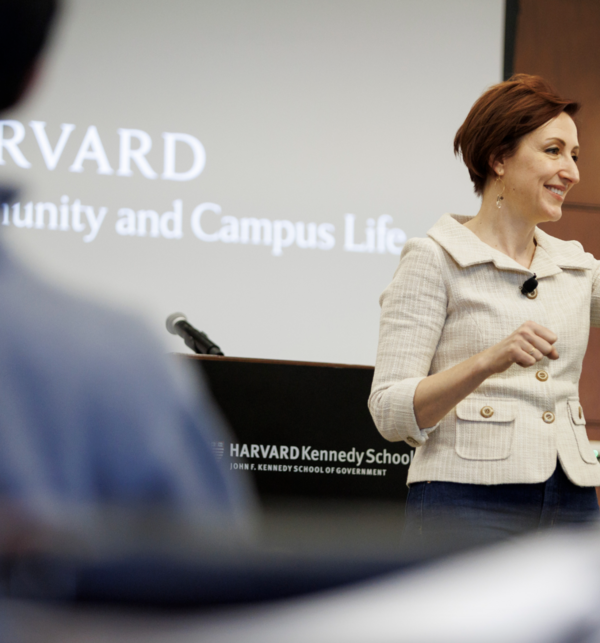
Leading Across Difference
Harvard creates opportunities for people with different identities, backgrounds, and viewpoints to engage constructively.
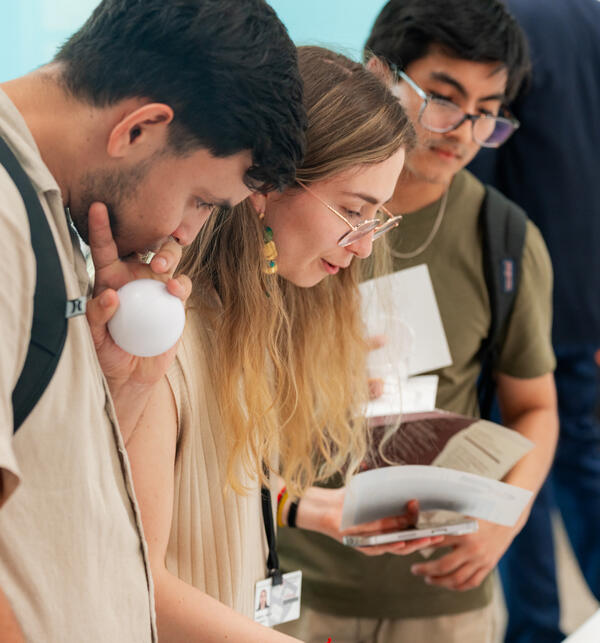
Leading Together
The ways in which we create opportunities for participation and connection across Harvard are the true measure of how we value respect and inclusivity.
A Year of Community In Action
Community Impact by the Numbers
Academic Year 2025–26
Download an accessible PDF of the Community Impact summary
How Our Partners Are Building Community
This section contains highlights of community-building efforts at each school.
The Global Engagement and Academic Impact Initiative
The Harvard Foundation’s Global Engagement and Academic Impact Initiative advances academic excellence, pluralism, and global engagement by connecting students with opportunities for collaborative learning, leadership development, and applied research. Through interdisciplinary programs and experiential learning, the initiative prepares students to bridge academic inquiry and policy engagement while addressing complex global challenges. A standout example this year was the Harvard Foundation’s delegation to the 70th Session of the United Nations Commission on the Status of Women, where participants engaged with policymakers, United Nations representatives, and civil society leaders, gaining firsthand experience in international diplomacy while strengthening their leadership skills and global perspective.
Culture & Community Advisory Board (CCAB)
Launched in the fall of 2025 as part of the new Office of Culture and Community (C&C) within the Harvard College Dean of Students Office, the inaugural Culture & Community Advisory Board (CCAB) is an incubator for community builders, that provides students with mentorship, administrative support, and funding to facilitate programming designed to cultivate community at the College. Collaboration across student groups is a funding requirement—no single organization can secure funding via this grant—encouraging programming at the intersection of various identities and interests.
Students serving on the CCAB provide input on C&C's grant distribution process. Reflecting on her experience evaluating grant proposals and connecting with student groups on campus, former CCAB member Shukria Yassin ’26 praised the grant application process for bringing students with a myriad experiences together, as well as the grant evaluation process for sharpening her own thinking and leadership. “I was very motivated to join the CCAB specifically, because it … sits at the intersection of two commitments that have shaped my time at Harvard. The first, being treating community building as serious intellectual work; and the second, being creating spaces where students can encounter perspectives that they might otherwise never cross paths with,” said Yassin.
Expanding Access for 50 Years
DCE and Harvard Extension School (HES) have long been leaders in expanding access to education through innovation and technology. In 2025, DCE celebrated its 50th anniversary, reflecting a legacy that stretches back more than a century, when Harvard began pioneering new ways to engage and support learners across their educational journey—with courses for high school students via Harvard Summer School, for adults learners via Harvard Extension School, for working professionals in the Professional & Executive Development Program, and with the Harvard Institute for Learning in Retirement. Throughout 2025, Nancy J. Coleman, dean of Harvard DCE, led events recognizing the achievements of DCE students, staff, faculty, and alumni and reflecting on the myriad of ways DCE has expanded access to Harvard for learners around the world and positively impacted the lives of hundreds of thousands of individuals and their communities.
Dean's Dialogue: Reimagining AI Alignment
In spring, SEAS hosted a Dean’s Dialogue exploring one of today’s most pressing questions: How can artificial intelligence be designed to reflect human values while respecting diverse perspectives? Bringing together leading researchers with differing views on AI alignment, the panel examined the technical, ethical, and societal trade-offs among safety, personalization, and pluralism. By modeling thoughtful engagement across disagreement, the discussion helped participants better understand the complexity of designing AI systems that are both responsible and inclusive, and helping members of the Harvard community to respect, relate, and cooperate across differences.
Graduate School Application Workshops: Applying to STEM PhD Programs 101 and Essay Workshop
In the 2025-26 academic year, Harvard SEAS launched a graduate school application workshop series, open to all students regardless of their school or university affiliation, with the goal of demystifying the process of applying for science, technology, engineering, and mathematics (STEM) PhD programs.
The first was an hour-long live Zoom session led by Dr. Vinothan N. Manoharan who walked participants through key application components including transcripts, research-focused CVs, statements of purpose, personal statements, and letters of recommendation. By the end of the workshop, participants acquired tools to personalize and craft a compelling engineering graduate application. Attendees could also register for a lottery to attend a follow-up workshop with Suzanne Smith, graduate science and engineering writing instructor/advisor at SEAS, to received personalized feedback on their statements of purpose. The workshop attracted more than 100 attendees representing several schools and countries.
Neurodivergent in STEM Panel
Neurodivergent members of the Harvard community shared their personal experiences navigating academia, raising awareness of the obstacles present in work and school spaces, many of which are built for neurotypical people. Panelists, a group of neurodiverse professionals in STEM fields included Larry Weru, Harvard Medical School associate; Anuksha Wickramasinghe, Fulbright fellow, and Jeff Karp, Endowed Chair at Mass General Brigham and Professor at Harvard Medical School and MIT.
Panelists shared how their neurodivergent identities have shaped their career paths and enhanced their problem-solving, leadership, teamwork across various sectors, and called attention to the ways their neurodivergence served as a tool in their scientific work, bolstering their resilience in the face of scientific setbacks and making them more creative scientists. The response was positive, with one attendee sharing, "As the father of [a] ... son with autism, it was incredibly insightful for me to hear from the neurodiverse panelists and to learn about the challenges they’ve encountered in academia."
Thanks for the Feedback: Simple Practices that Will Accelerate Your Learning
GSAS launched a Civil Discourse initiative to help incoming students engage thoughtfully across differences and build a stronger academic community from the start of their Harvard experience. Through orientation programming and pre-arrival learning materials—including a video introduction and a reading from Thanks for the Feedback by Harvard Law School faculty member Sheila Heen—students explored the role of curiosity, empathy, respect, and intellectual courage in navigating feedback and difficult conversations. The initiative culminated in an interactive session during How to Harvard Day, where students practiced these skills and connected with peers across disciplines. Supporting students from more than 57 graduate programs, the initiative reinforced Harvard’s commitment to respectful engagement, inclusive dialogue, and the shared learning that strengthens community across diverse perspectives.
Faculty Seminar on Antisemitism
In partnership with the HBS Working Together Steering Committee, Harvard Business School’s Office for Community and Culture convened a faculty seminar on antisemitism attended by more than 100 faculty members. The program explored the historical intersections of antisemitism and capitalism and featured a panel discussion with Rabbi Marc Baker of Combined Jewish Philanthropies of Greater Boston and Rabbi Jason Rubenstein of Harvard Hillel on the ways contemporary antisemitism can shape classroom dynamics and learning environments. By creating space for informed discussion and shared understanding, the seminar equipped faculty to engage thoughtfully with complex issues affecting their students and classrooms. HBS plans to continue the series annually, reinforcing its commitment to fostering respectful dialogue, continuous learning, and a culture where all members of the community can thrive.
Dialogue for Understanding Program for MBA Students
The HBS MBA program launched the Dialogue for Understanding Program, an initiative designed to enhance the required curriculum with dialogic skills and best practices. Facilitated by Monica Giannone, director of the Negotiation and Conflict Resolution Collaboratory at the Center for Public Leadership at Harvard Kennedy School, the program aims to equip students with advanced skills in dialogue, understanding, and conflict resolution. The program design also featured input from recent HBS graduates, faculty, and staff. Dialogue for Understanding will continue in the 2026-27 academic year , with a possible expansion to doctoral students.
The Science of Revenge: Understanding the World’s Deadliest Addiction and How to Overcome It
GSD’s Community Conversation series welcomed Yale researcher and psychiatry lecturer James Kimmel, Jr., to explore the neuroscience and psychology of revenge and its impact on individuals and society. Bringing together students, faculty, and staff from across the School, the discussion examined how retaliation and “cancel culture” can hinder meaningful engagement and offered evidence-based strategies for forgiveness, reflection, and connection. By creating space for candid conversation on a complex topic, the program helped participants better understand why engaging across difference can feel challenging while reinforcing the importance of empathy and respectful dialogue in building community.
Canvas Module: Embracing Community Values Across Difference
As a mechanism to uphold GSD's Community Values—including fostering an environment where all community members are respected and able to engage in their fullest capacities—GSD developed a short lesson that explores the nuances of bias and developing interpersonal relationships across difference.
This original Canvas-based learning module aims to equip community members with tools for engaging respectfully and effectively across difference. The self-paced lesson explores foundational concepts of bias, perspective-taking, and interpersonal relationships. It invites learners to examine their own role in shaping perceptions and interactions. Through reflection-based exercises, participants are encouraged to connect their personal values to GSD's Community Values and to develop habits of self-awareness that support ongoing growth. By making this resource available to incoming students, the module creates a shared baseline for full, equitable participation in the GSD community.
The HDS Conference on Truth and Reconciliation Experiences in the U.S.
The HDS Office for Community and Belonging, in collaboration with the HDS Truth and Healing Commission Steering Committee composed of faculty, students, staff, and alumni, convened the Harvard Divinity School Conference on Truth and Reconciliation Experiences in the U.S. The conference brought together approximately 100 participants from Harvard and beyond to explore how communities confront historical harm through truth-telling, dialogue, and healing. Featuring leaders from the Greensboro and Maine-Wabanaki Truth and Reconciliation Commissions, the conference served as the public launch of the development of HDS’s Truth and Healing Commission and highlighted approaches to accountability, repair, and reconciliation across differences. By engaging students, faculty, staff, alumni, and community partners in these conversations through a restorative, heart-centered approach, the event reinforced HDS’s commitment to fostering constructive dialogue and building a more just and connected community and world. This work builds on but is not limited to the recommendations of the Report of the Presidential Committee on Harvard & the Legacy of Slavery.
Faith-Informed Inclusion: Addressing Islamophobia and Intersecting Biases Workshop
On October 20, 2025, as a part of its series Building Community through Love, the HDS Office for Community and Belonging hosted – “Faith-Informed Inclusion: Addressing Islamophobia and Intersecting Biases Workshop,” cosponsored by HDS Religion and Public Life. Maha Elgenaidi and Dr. Zachary Markwith of Islamic Networks Group facilitated this workshop designed for students, faculty, and staff. Held through a restorative, heart-centered approach, this workshop incorporated two interactive exercises: First, on recognizing Islamophobia and related forms of bias in everyday language; and next, on promoting inclusion and countering prejudice based on principles of love, community, and peacebuilding drawing from the Qur’an and Hadith as resources.
Participant feedback showed that participants found the workshop to be very informative and expressed a desire to learn more. Plans for another session are being explored. Dean Melissa Wood Bartholomew said, “The facilitators did an excellent job helping participants understand how to recognize Islamophobia and intersecting biases and how to respond in peace, utilizing resources from the Islamic tradition. Many expressed a desire to go deeper, and we look forward to continuing to learn more."
Identifying and Responding to Antisemitism: A Conversation and Workshop
On November 10, 2025, the HDS Office for Community and Belonging hosted "Identifying and Responding to Antisemitism: A Conversation and Workshop" cosponsored by HDS Religion and Public Life. This workshop was a part of OCB’s series Building Community through Love. Dr. Gregg Drinkwater, inaugural program director for the U.C. Berkeley Antisemitism Education Initiative, a project of the Center for Jewish Studies, and Professor Shaul Magid, HDS professor of modern Jewish studies in residence, were in conversation regarding Jewish identity and the historical roots and contemporary manifestations of antisemitism. The historical discussion included the role of so-called race science in antisemitism. Held through a restorative, heart-centered approach, this workshop engaged HDS students, faculty, and staff regarding these themes. The facilitators helped to build capacity in the ability of the participants to recognize antisemitism and respond through offering grace, asking curious questions, and remembering the role of trauma.
The participants found the workshop to be very informative and expressed a desire to learn more. Plans for another session are being explored for next fall.
HDS OCB Restorative Justice 101 Lunch & Learns
The Harvard Divinity School Office for Community and Belonging offered thirteen Restorative Justice (RJ) 101 Lunch & Learn circle gatherings throughout the 2025-2026 academic year. Melissa Wood Bartholomew, associate dean for community and belonging, facilitated eight, hour-long weekly circles in the fall and five in the spring. The aim was to build community each week while exploring the spiritual and indigenous roots of restorative justice and learning how applying the RJ principles and practices as a way of being fosters healthy engagement across differences including religious, cultural, and ideological differences, builds community and supports the flourishing of all beings. These gatherings were open to students, faculty, and staff and were well attended each week. While students were the primary participants, there were some weeks when the circle included staff, faculty, and leadership, including HDS Dean Marla Frederick.
An Evening with Michael Sandel Exploring “The Tyranny of Merit”
HGSE’s Askwith Education Forum “An Evening with Michael Sandel” urged attendees to consider “the tyranny of merit” on higher education. Political philosopher and lecturer Michael Sandel and HGSE Dean Nonie Lesaux explored how meritocracy shapes our education system and its impact on fairness and opportunity. Sandel explored topics from the country’s current political divide to the erosion of American civic life. Sandel advocated for more public meeting spaces where people from all backgrounds can co-exist, as well as an education system which prioritizes the common good over exclusivity and competition. Attendees at the forum were able to engage with the speaker during a moderated questions-and-answers period at the event’s close. Now in its 28th year, the forum is an opportunity for community conversation and connection and contributes to the Graduate School of Education’s commitment to promoting dialogue across differences.
Civil Society at the Cinema
The HKS Civil Society at the Cinema is a film-and-discussion series that uses artistic experiences to strengthen civic culture and empathy at the University. Screenings were held in a neutral, non-classroom setting and invited students, faculty, and community members to enjoy a film followed by structured conversations about the difficult issues the film raised. Co-moderated roundtables led by students and faculty helped introduce complex contemporary problems, surface shared concerns, and model respectful, curiosity-driven dialogue focused on listening and speaking across discomfort. Attendees noted that the events “opened up the room” for genuine dialogue and voiced strong interest in similar opportunities. The project is a model of a scalable way to spark honest conversation on polarizing topics, showing how disagreement can coexist with connection, empathy, and intellectual rigor in University life.
From Dissent to Dialogue: Conservative and Progressive Legal Dialogue
This project established a shared space at Harvard Law School for conservative and progressive students to move past partisan opposition into genuine conversation. Co-hosted by the Federalist Society and the American Constitution Society, the series brought together judges, scholars, and practitioners to discuss hot-button legal issues, aiming to reduce siloing and model respectful, intellectually curious disagreement.
Attracting roughly 225 attendees, the events successfully fostered cross-engagement. By the second event, conservative and progressive participants were actively questioning and responding to one another, exploring ideas and positions via thoughtful conversation. Attendee feedback highlighted a strong desire for longer discussions and a unique interest in uncovering unexpected areas of agreement.
Ultimately, the series proved the high demand for well-structured, cross-ideological dialogue. It offers a flexible, scalable framework for addressing contentious topics at HLS and beyond, helping students understand not just what others believe, but why.
Learn more about the Dissent to Dialogue series in the Harvard Gazette
Dean of Students and Office of Community Engagement, Equity, and Belonging
Reaffirming Community Values through Dialogue and Learning
The HMS Office of Culture and Community Engagement led a collaborative effort to review and update the School’s mission and community values, engaging students, faculty, clinical and research fellows, and staff. Through surveys and in-person feedback sessions. The process helped clarify the principles that guide the HMS community while reinforcing a shared commitment to civil discourse, mutual respect, and belonging. Building on this foundation, HMS offered a range of workshops, lectures, and community events focused on pluralism, constructive disagreement, interfaith engagement, and community building. Together, these efforts strengthened connections between personal and institutional values, creating opportunities for learning across differences and fostering a community grounded in dialogue, respect, and shared purpose.
Strategic Planning and Constructive Dialogue
HSDM engaged its community in a comprehensive strategic planning process and a parallel initiative on Constructive Dialogue and Belonging, creating multiple opportunities for students, faculty, staff, and trainees to shape the School’s future. Through listening sessions, forums, retreats, and open feedback periods, these efforts fostered shared ownership and reinforced a culture where all members can participate fully and engage across differences. To build on this foundation, HSDM also partnered with Harvard Medical School to provide dialogue facilitation training for faculty, staff, and student leaders, equipping participants with practical strategies to cultivate trust, navigate conflict, and encourage curiosity and civil discourse. Together, these initiatives advance a community rooted in participation, belonging, and meaningful engagement.
Community member input was solicited throughout each phase of the process via a variety of forums ranging from participation in four separate strategic priorities led by Goal Champions via dedicated mini-retreats; 1-2 in-person and virtual forums; and a dedicated strategic priority aimed at elevating our community by enhancing opportunities for mentorship, growth, and connection for all faculty, staff, and learners.
The Dean’s Working Group on Constructive Dialogue and Belonging also convened to inform HSDM’s school-wide approach to fostering a pluralistic culture of belonging—one in which all members of the community feel able to express themselves, engage in civil discourse, and connect across difference. During the targeted needs assessment phase, working group members hosted a series of ten listening sessions across stakeholder groups including students, faculty, staff, and research trainees, to capture a range of perspectives in a safe and structured manner. Additionally, anonymous feedback on emerging recommendations was collected during a one-week school-wide open comment period. The culmination of this working group effort will be presented to the entire school community on May 21, 2026 via a Community Town Hall Forum.
Engaging across difference: Foundations Training for Faculty, Staff and Student Facilitators
On January 9-10, 2026, cohorts of 50 faculty/staff and 50 predoctoral and postdoctoral students across HMS and HSDM participated in a half-day in-person workshop. Participants were provided with the foundational knowledge and skills to facilitate and model norms around constructive dialogue. Participants learned strategies to proactively create a culture of trust in and out of the classroom, practice techniques to support the development of students’ growth mindsets and skills for engaging across differences, and specific tactics to navigate conflict in moments of controversy or misunderstanding. The Foundations Training for facilitating dialogue is equipping faculty, staff, and student leaders with the tools and skills to help create a culture of trust and understanding by fostering opportunities for dialogue, learning, and curiosity.
Crossroads Conversation Series: Connecting through Values
The Chan School’s Crossroads Conversation Series brings together students, faculty, and alumni for informal, cross-departmental conversations centered on the moments and relationships that shape academic and personal growth. Through small-group discussions, faculty and alumni share how someone’s advice, encouragement, or challenge impacted their life, and participants are invited to reflect on their own experiences and engage with perspectives across the community. By creating space for honest dialogue and meaningful connection, the series strengthens relationships across roles and disciplines while reinforcing the shared values that support Harvard’s academic mission.
Depolarization Skills Workshop Series
In partnership with expert facilitators from Essential Partners, the Radcliffe Institute for Advanced Study offers a staff development series that equips participants with practical tools for navigating conversations across differences with confidence and care. Through three sessions—focused on constructive communication, meeting design, and facilitation during difficult moments—participants explore why conversations can become challenging and learn strategies to foster trust, collaboration, and openness in the workplace. By emphasizing everyday communication skills and proactive engagement, the series helps staff build stronger relationships and create conditions for more productive dialogue across perspectives.
Participant feedback highlighted the program’s impact, with one attendee calling it “one of the best workplace trainings I have ever had,” underscoring its value in advancing respectful engagement and cooperation across the Harvard community.
Academic Freedom and Connecting Across Difference initiative
Institutions of higher education today face complex challenges. Academic freedom—the freedoms of universities to determine the membership of their communities of scholars and students and the content of their curricula, of scholars to conduct and disseminate research and to teach, and of students to learn, without interference, censorship, or retaliation—is under threat.